Why You Need a Cover Letter for a Career Change
Making a career change is a significant life decision, and it requires a strategic approach. A well-crafted cover letter is not merely an optional extra in this situation it is an essential tool that can bridge the gap between your past experience and your desired future. Unlike a resume which is a factual account of your employment history a cover letter provides you with the opportunity to tell your story to explain your motivations for the career shift and to highlight the skills and experiences that are relevant to the new role. In essence, a cover letter allows you to proactively address any concerns that a hiring manager might have about your lack of direct experience in the new field, making it an indispensable asset in your job application arsenal. Using cover letter career change examples can show you how to present yourself in a professional way.
Highlighting Transferable Skills
When transitioning careers, emphasizing your transferable skills becomes paramount. These are the skills you’ve honed in previous roles that are valuable and applicable in your new desired field. Identifying and showcasing these skills is key to persuading a hiring manager that you can quickly adapt and excel in a new environment. Think about skills like communication, problem-solving, leadership, project management, and teamwork. The success of your career change application often hinges on how effectively you can illustrate the relevance of your existing skills to the requirements of the new job. Focusing on these transferable skills is a great way to show you can do the job. Examples of cover letter career change can help you to list your skills.
Identify Your Transferable Skills

Begin by thoroughly analyzing the job description for the role you’re targeting. Identify the key skills and qualifications the employer is seeking. Then, take an inventory of your own skills, experiences, and accomplishments from your past roles. Which of these align with the requirements listed in the job description? Make a list of skills that you have gained over the years. Are you skilled in communication? Leadership? Management? Customer service? The goal is to find overlaps between your existing skill set and the needs of the new role. Be honest with yourself about your strengths and weaknesses, and focus on the skills that directly translate to the new position. It can be useful to check cover letter career change examples to help you list your skills.
Quantifying Your Achievements
Simply listing your skills is not enough. To make your application compelling, you need to quantify your achievements whenever possible. Instead of stating, “Managed projects,” try, “Successfully managed 10 projects, delivering them on time and under budget, resulting in a 15% increase in team efficiency.” Instead of just saying that you have leadership skills, try to show that you actually lead. By using numbers, statistics, and specific examples, you provide concrete evidence of your capabilities and the value you can bring to the new role. This approach makes your claims much more credible and memorable. Make sure to provide an excellent overview of your skills.
Demonstrating Your Passion and Motivation
A career change is often driven by a genuine interest in a new field. Your cover letter should clearly articulate your passion for the new role and your motivation for making the change. The hiring manager wants to know why you are interested in this new role. This is your chance to explain your reasons for wanting to transition careers and the specific factors that have drawn you to the industry or role. Expressing your enthusiasm can help you overcome concerns about your lack of direct experience. Remember to tailor your cover letter for each job and express your passion for the particular company you are applying to. Show why you are the perfect fit for the role. Reviewing cover letter career change examples will give you an idea of the best approach.
Show, Don’t Just Tell

Instead of simply stating “I am passionate about this field,” provide a specific example that demonstrates your enthusiasm. Have you taken relevant courses or obtained certifications? Have you volunteered in the industry or completed a related project? If so, be sure to mention this. Show your passion by sharing personal anecdotes, highlighting relevant experiences, and discussing what excites you about the opportunity. This approach is more engaging and persuasive than just making declarative statements. Be sure to show the recruiter your passion.
Researching the Target Industry/Company
Demonstrating your knowledge of the industry and the specific company is crucial. Research the company’s mission, values, recent news, and any challenges they are facing. This information will help you tailor your cover letter and show that you have done your homework. By demonstrating that you understand the company’s goals and how your skills and experience can contribute, you increase your chances of making a positive impression. Look at the company’s website. Look at the company’s social media. Understanding the company’s culture is important. Having a strong knowledge of the company is a great thing to have and it will show how much you care.
Tailoring Your Cover Letter
Customize your cover letter for each job application. Avoid using generic templates. Instead, use the job description and your research to identify the specific skills and experiences the employer is seeking. Then, structure your letter to address these requirements directly. By tailoring your cover letter, you demonstrate your genuine interest in the role and your understanding of the company’s needs. Generic letters are easily recognized and often discarded. Make sure your cover letter shows that you understand the role and that you are a great fit. Each cover letter should show the company that you are interested in their business and will make a good employee. Looking at cover letter career change examples can help you learn how to best tailor your cover letter to fit your needs.
Showcasing Your Enthusiasm

In addition to expressing your passion, demonstrate your enthusiasm for the specific opportunity. Explain why you are excited about the role, the company, and the industry. You can mention specific projects, initiatives, or company values that resonate with you. Showing enthusiasm helps the hiring manager understand your motivation and commitment to the new role. Make it clear that you are not just looking for any job, but this particular job. Showing enthusiasm may be the best thing you can do to make sure you stand out from the crowd. Show your enthusiasm.
Structuring Your Cover Letter
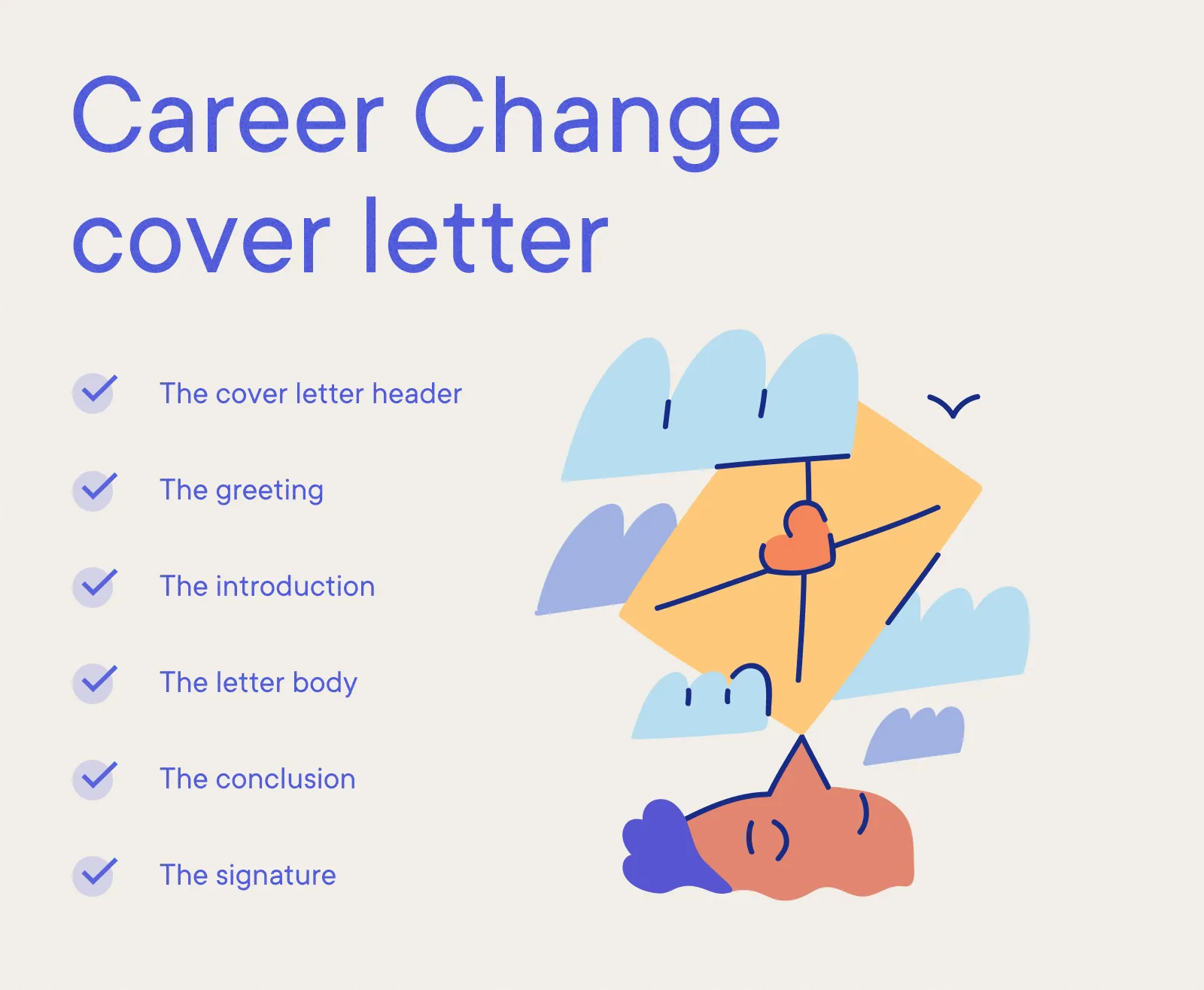
A well-structured cover letter is easy to read and understand. Use a clear and logical format to organize your thoughts. A standard cover letter typically includes a header with your contact information, a salutation, an opening paragraph, body paragraphs, and a closing paragraph. Proper formatting is also important. Making sure you follow a standard format will ensure that the recruiter can easily see what you have to offer. Proper formatting is one of the most important parts of a career change cover letter.
Header and Contact Information
Start your cover letter with your full name, address, phone number, and email address. This information should be located at the top of the document, either on the left or right side. Following this, include the date and the hiring manager’s name and title, if known, along with the company’s address. Make sure that your information is current and that your email address is professional. You want the hiring manager to be able to contact you easily. This is a key component of any cover letter.
Opening Paragraph

The opening paragraph should immediately grab the reader’s attention. State the position you are applying for and briefly explain why you are interested in the role. Mention where you saw the job posting. If you were referred by someone, mention their name. The opening paragraph should be concise, engaging, and set the tone for the rest of your letter. This is your first chance to impress the hiring manager, so make it count. Make sure to be enthusiastic in your introduction. This first impression is important.
Body Paragraphs
The body paragraphs are the heart of your cover letter. Use this section to highlight your transferable skills, quantify your achievements, and demonstrate your passion and motivation. Address how your past experiences align with the job requirements. Explain why you are making a career change and how your skills and experience are relevant to the new role. Support your claims with specific examples and data. Remember to keep the reader engaged. Reviewing cover letter career change examples can help you organize this information.
Closing Paragraph
In your closing paragraph, reiterate your interest in the position and thank the hiring manager for their time and consideration. Express your enthusiasm for the opportunity and indicate your willingness to discuss your qualifications further. Include a call to action, such as stating that you are available for an interview. End with a professional closing such as “Sincerely” or “Best regards,” followed by your name. The closing paragraph is the final thing the recruiter will see, so make it positive.
Formatting and Proofreading

Proper formatting and proofreading are essential for a professional cover letter. Formatting makes your letter visually appealing, while proofreading ensures that it is free of errors. These aspects are crucial because they reflect your attention to detail and your commitment to professionalism. Make sure your cover letter is easy to read. A well-formatted and error-free cover letter increases your chances of getting hired.
Font and Layout
Choose a clean and professional font, such as Times New Roman, Arial, or Calibri. Use a font size between 10 and 12 points. Maintain consistent formatting throughout your cover letter. Use single spacing for the body of your letter, with a blank line between paragraphs. Use a standard margin size (1 inch on all sides). Make sure there are no formatting inconsistencies or any issues. The formatting should make your letter easy to read.
Proofreading Tips
Proofread your cover letter carefully. Check for grammar, spelling, punctuation, and formatting errors. Read your letter aloud to catch any awkward phrasing or sentences. Consider having a friend or colleague proofread your letter as a fresh pair of eyes can often spot errors that you might miss. Proofreading is a very important part of the application process. Ensure that your cover letter is free of mistakes.
In conclusion, a well-crafted cover letter is a critical component of a successful career change. By highlighting transferable skills, quantifying achievements, demonstrating passion, researching the target industry, tailoring your letter, and paying attention to formatting and proofreading, you can significantly increase your chances of landing your dream job. Use these guidelines and the cover letter career change examples provided as a foundation for crafting compelling applications and taking the next steps towards your career goals.