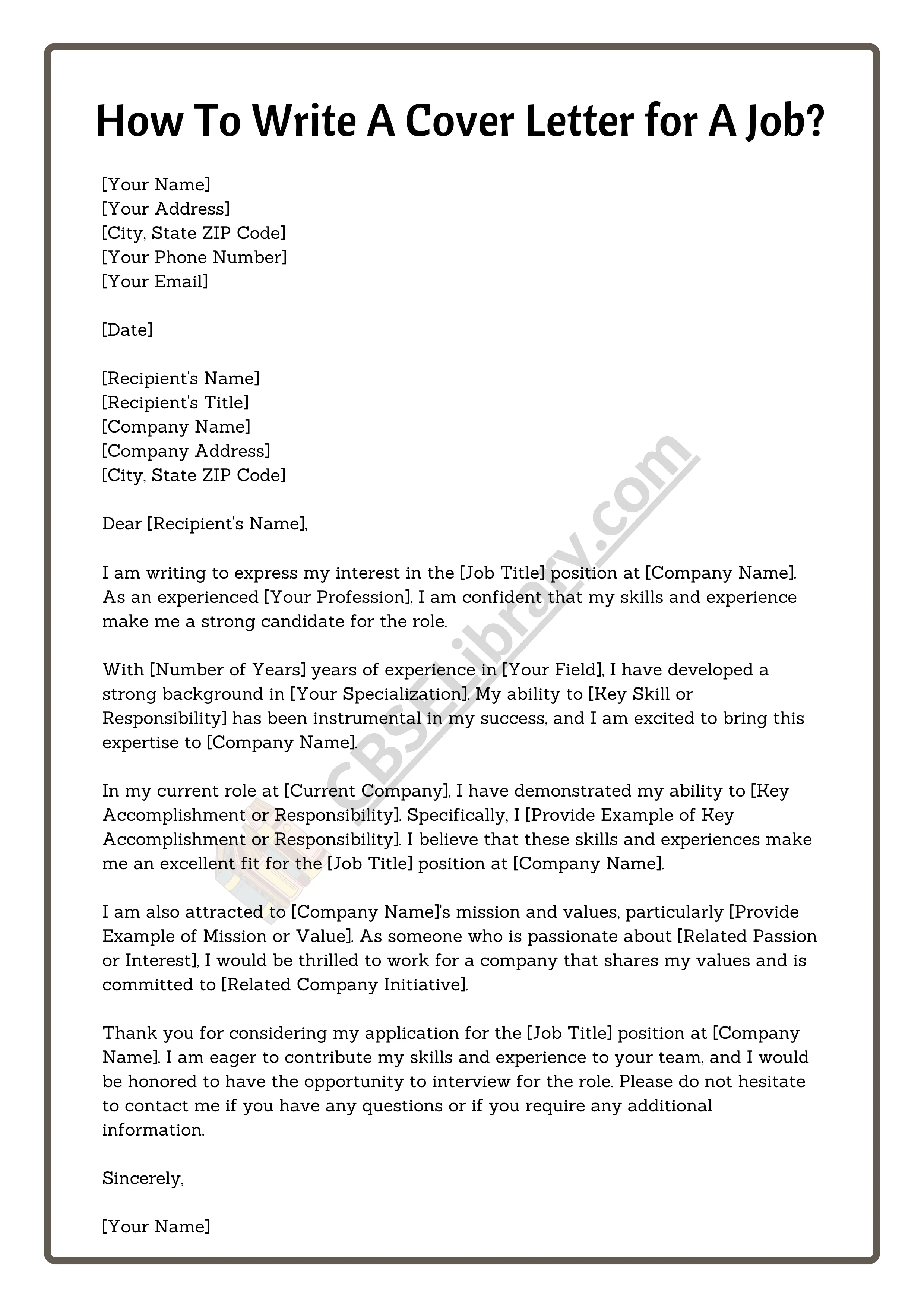
What is a Cover Letter
A cover letter is a crucial document accompanying your resume when applying for a job. It serves as an introduction, allowing you to highlight your skills, experiences, and qualifications in a way that complements your resume. Unlike a resume, which provides a factual overview of your career, a cover letter allows you to express your personality, demonstrate your interest in the specific role and company, and explain why you are the perfect fit. It’s your chance to make a strong first impression and persuade the hiring manager to read your resume and consider you for an interview. A well-written cover letter can significantly increase your chances of landing an interview, making it a vital part of any job application strategy. Therefore, understanding how to write a compelling cover letter is essential for job seekers.
Why is a Cover Letter Important
The importance of a cover letter lies in its ability to provide context and personalization to your application. While your resume lists your skills and experiences, a cover letter allows you to explain how those skills and experiences align with the specific requirements of the job. It allows you to showcase your enthusiasm for the role and the company, which is something a resume alone cannot do. A cover letter helps you connect with the hiring manager on a personal level, demonstrating that you’ve done your research and are genuinely interested in the opportunity. It also provides a space to address any potential gaps in your resume or to explain career transitions. In a competitive job market, a well-crafted cover letter can set you apart from other candidates, making you more memorable and increasing your chances of securing an interview.
Key Elements of a Cover Letter

A well-structured cover letter typically includes several key elements that work together to create a compelling narrative. These elements are essential for capturing the hiring manager’s attention and making a strong case for your candidacy. Properly incorporating these components can significantly improve your cover letter’s effectiveness and help you stand out from the competition. We will delve into each of these components individually, providing guidance and examples to help you craft a cover letter that gets results.
Your Contact Information
Start your cover letter with your contact information. Include your full name, phone number, email address, and optionally, your LinkedIn profile URL. This information should be clearly displayed at the top of the letter, so the hiring manager can easily contact you. Make sure your email address is professional and that your phone number is current and includes a voicemail message. Also, your LinkedIn profile should be updated to reflect your current experience.
The Employer’s Contact Information
Below your contact information, include the employer’s contact information. This typically includes the name of the hiring manager (if known), their title, the company name, and the company’s address. If you can’t find the hiring manager’s name, address the letter to “Hiring Manager” or “Recruiting Team.” Researching the hiring manager can show your initiative and attention to detail. Correctly addressing the letter shows your professionalism and respect for the company.
Salutation

The salutation is your greeting to the hiring manager. Start with “Dear Mr./Ms./Mx. [Last Name],” if you know the hiring manager’s name. If you don’t know the name, use “Dear Hiring Manager” or “Dear Recruiting Team.” Avoid generic greetings such as “To Whom It May Concern.” Ensure you use the correct title and spelling of the name, as this demonstrates attention to detail. The salutation sets the tone for the rest of your letter, so it should be professional and respectful.
Opening Paragraph
Your opening paragraph should immediately grab the reader’s attention. State the position you are applying for and where you found the job posting. Briefly explain why you are interested in the role and the company. Highlight one or two key skills or experiences that make you a strong candidate. Make sure your introduction is concise and engaging, setting the stage for the rest of the letter. Avoid generic phrases and be specific about why this role appeals to you.
Body Paragraphs
The body paragraphs are the core of your cover letter. Use these paragraphs to elaborate on your skills and experiences, providing specific examples that demonstrate your qualifications. Tailor your examples to the job description, highlighting the skills and experiences most relevant to the position. Explain how your skills align with the company’s needs and values. This is your chance to showcase your achievements and explain how you can contribute to the company’s success. Each paragraph should focus on a specific aspect of your qualifications, ensuring clarity and conciseness.
Highlight Your Skills and Experiences

In your body paragraphs, highlight the key skills and experiences that align with the job requirements. Review the job description carefully and identify the skills and qualifications the employer is seeking. Use concrete examples from your previous experiences to demonstrate how you have used these skills successfully. Quantify your accomplishments whenever possible, using numbers and data to show the impact of your work. This approach makes your claims more credible and helps the hiring manager understand the value you can bring to the role. By presenting your skills and experiences in a clear and compelling way, you make a strong case for why you should be considered for the position.
Quantify Your Achievements
Whenever possible, quantify your achievements by using numbers and data. Instead of saying “Improved customer satisfaction,” say “Increased customer satisfaction by 15%.” Quantifying your achievements makes your claims more specific and provides tangible evidence of your capabilities. Use metrics like percentages, dollars, or units to showcase the impact of your work. This also demonstrates your ability to measure and analyze results. Quantifying your achievements helps you stand out from other candidates and provides the hiring manager with a clear understanding of your accomplishments.
Showcase Your Research
Demonstrate that you have researched the company and understand its mission, values, and recent achievements. Mention specific projects, initiatives, or values that resonate with you and explain why you are excited about the opportunity to contribute. Showcasing your research demonstrates your interest in the company and your genuine desire to be a part of their team. This shows that you are not just applying for any job but are specifically interested in this company and role. It also signals your proactive approach.
Closing Paragraph

In your closing paragraph, summarize your key qualifications and reiterate your interest in the position. Thank the hiring manager for their time and consideration. Express your enthusiasm for the opportunity and your confidence in your ability to contribute to the company’s success. This is also the place to mention your availability for an interview and how the hiring manager can reach you. Make sure your closing paragraph is professional and leaves a positive final impression.
Call to Action
Include a clear call to action in your closing paragraph. State that you are eager to discuss your qualifications further and are available for an interview at their earliest convenience. Provide your contact information again to make it easy for the hiring manager to reach you. Make it clear that you are ready to take the next step in the hiring process. A strong call to action encourages the hiring manager to contact you, increasing your chances of landing an interview.
Sign-off
End your cover letter with a professional sign-off such as “Sincerely,” “Best regards,” or “Thank you.” Follow this with your typed name. If you are sending a printed cover letter, leave space for your signature above your typed name. A professional sign-off completes your cover letter and leaves a lasting impression. Make sure your sign-off is appropriate for the level of formality of the job and company.
Cover Letter Examples by Industry

Cover letters should be tailored to the specific industry and the role you are applying for. Different industries and roles often require different skill sets and emphasize different aspects of your experience. You can find many examples online. Here are examples to inspire your cover letter writing process.
Example 1 Marketing Cover Letter
When writing a marketing cover letter, focus on your ability to drive results, build brand awareness, and use various marketing channels. Highlight your experience with campaigns, data analysis, and creative content creation. Include examples of successful marketing strategies and quantify the results you achieved, such as increased website traffic, lead generation, or sales growth. Show your knowledge of current marketing trends and your understanding of the target audience. Tailor your letter to the specific marketing role, emphasizing the skills and experience that align with the job description. You should display your creativity and passion for marketing to showcase you have the right drive.
Example 2 Cover Letter for Software Engineer
For a software engineer, your cover letter should highlight your technical skills, coding proficiency, and experience with specific programming languages, frameworks, and tools. Mention projects you’ve worked on, especially those that showcase your problem-solving abilities and technical expertise. Emphasize your understanding of software development methodologies and your experience in collaborative environments. Showcase any achievements, such as successful product launches, code contributions, or performance improvements. Use technical terms and show your understanding of the company’s tech stack.
Example 3 Cover Letter for Teacher

A teacher’s cover letter should focus on your teaching experience, classroom management skills, and your ability to create a positive learning environment. Highlight your experience with curriculum development, lesson planning, and assessment techniques. Showcase your ability to engage students, foster critical thinking, and adapt to different learning styles. Include examples of your successes, such as improved student performance, positive parent feedback, or innovative teaching methods. Express your passion for education and your commitment to student success. Tailor your letter to the specific teaching role, highlighting the skills and experience that align with the school’s needs and values.
Cover Letter Writing Tips
Follow these tips to write the best cover letter.
Proofread and Edit Your Cover Letter
Before submitting your cover letter, carefully proofread and edit it to eliminate any grammatical errors, spelling mistakes, or typos. Ask a friend or family member to review your letter as well. A polished and error-free cover letter demonstrates your attention to detail and professionalism. Proofreading is essential to ensure your cover letter is free of errors, making a positive impression. Errors in your cover letter can undermine your credibility and reduce your chances of getting an interview. Make sure to spell out any special acronyms too.
Tailor Your Cover Letter
Customize each cover letter for the specific job and company you are applying to. Avoid using a generic cover letter. Review the job description carefully and highlight the skills and experiences most relevant to the position. Show that you understand the company’s mission, values, and culture. Tailoring your cover letter demonstrates your interest and commitment, increasing your chances of getting noticed. Your cover letter should be a reflection of the specific role and the organization’s needs.
Use Keywords
Incorporate keywords from the job description into your cover letter. This helps your application pass through applicant tracking systems (ATS) and ensures that your letter aligns with the employer’s requirements. Use keywords naturally and strategically throughout the letter. But don’t overdo it by stuffing keywords everywhere, just incorporate the important ones. Using keywords can also help to make your cover letter more relevant to the hiring manager. By including keywords, your application is more likely to be noticed and reviewed, increasing your chances of securing an interview.
Format Your Cover Letter
Use a professional and easy-to-read format for your cover letter. Use a standard font size (e.g., 11 or 12 points) and font style (e.g., Times New Roman, Arial, or Calibri). Use single spacing within paragraphs and double spacing between paragraphs. Keep your letter concise, ideally one page in length. Ensure your formatting is consistent and visually appealing. A well-formatted cover letter is easy to read and makes a positive impression on the hiring manager.
Cover Letter Mistakes to Avoid
Avoid these common mistakes when writing your cover letter.
- Using generic language
- Focusing only on what you want
- Repeating your resume verbatim
- Having grammatical errors or typos
- Not tailoring your letter to the job
- Including irrelevant information
- Being too casual or informal
- Exceeding one page in length